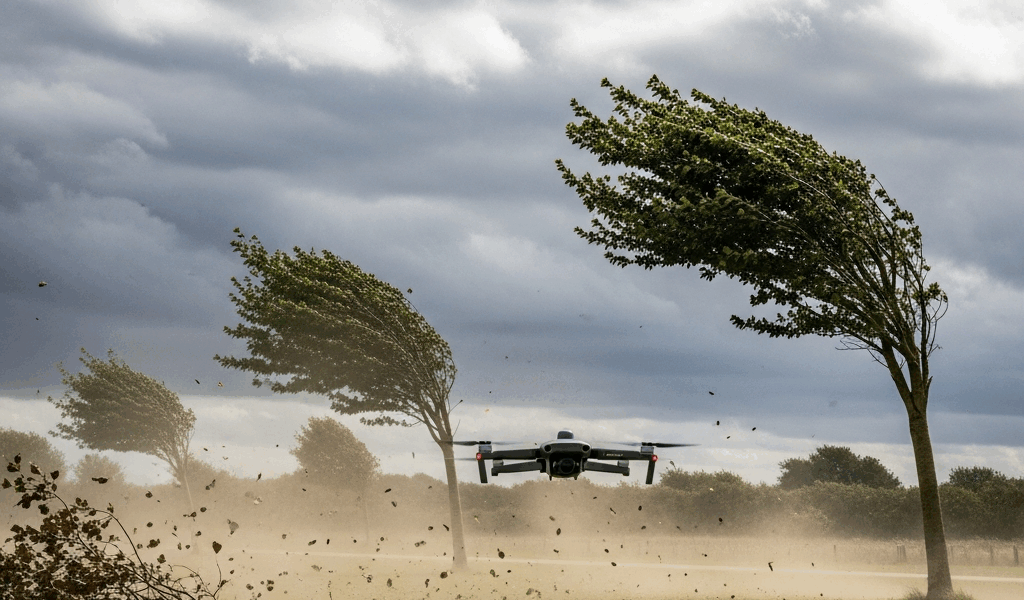
What the Mini 4 Pro Wind Resistance Spec Actually Means
I’ve watched pilots squint at DJI’s spec sheet and walk away confused. The Mini 4 Pro has a Level 5 wind resistance rating — which translates to a maximum sustained wind speed of 10.5 meters per second, or about 23 mph if you’re thinking in American units. But here’s what that actually means in the field, not in some marketing document written by people who’ve never flown in actual wind.
That 23 mph threshold isn’t the speed where your drone suddenly becomes dangerous and plummets. It’s the speed where the Mini 4 Pro can no longer hold a stationary position in the air without drifting backward or sideways. Think of it as the drone’s confidence ceiling. Below 10.5 m/s, the flight controller compensates for wind and keeps the aircraft where you want it. At or above that speed? You’re fighting the elements, and no amount of stick input changes that.
On the Beaufort scale — which meteorologists and pilots have relied on for centuries to describe wind conditions — 10.5 m/s sits right at Force 5, “Fresh Breeze.” Small trees sway noticeably. Larger branches bend. Whitecaps appear on lakes and rivers. This is observable, tangible wind. You don’t need an anemometer to know you’re at the edge of safe operating conditions.
Here’s the mistake I made early on, honestly: I conflated “can maintain position” with “safe to fly.” Those are not the same line. The Mini 4 Pro might technically hold position in 22 mph wind, but your safety margin disappears fast. Battery drain skyrockets. Return-to-home becomes a white-knuckle affair. You lose the buffer you need when something unexpected happens — a gust, a wind direction shift, or your own navigation error.
How to Read Wind Before You Launch
Checking the weather forecast isn’t enough. I learned this the hard way at a coastal location where the forecast said 12 mph winds, but the micro-conditions near the water had me fighting gusts closer to 25 mph within minutes of takeoff.
Start with Windy.com or UAV Forecast. Both show wind speed and direction at different altitudes — which matters, because most pilots check ground level and miss that wind intensifies 100 feet up. The Mini 4 Pro operates comfortably up to 120 meters (394 feet), and wind speed at altitude can be significantly higher than on the ground. Sometimes 40 or 50 percent faster, depending on terrain and local geography.
Next, step outside and read the trees and grass. Sustained wind in the 10-12 mph range makes branches move steadily but not bend severely. At 15-17 mph, small branches bend and change angle noticeably. At 20+ mph, whole small trees sway. This is your ground truth before you even power on the drone.
Here’s the critical detail most pilots skip: gusts matter more than sustained wind speed. A steady 18 mph wind is far more manageable than a 15 mph average with 25 mph gusts. That sudden spike catches your Mini 4 Pro mid-maneuver and pushes it places you didn’t plan to go. Watch the grass or leaves for 30 seconds. Do they move in waves, suddenly intensifying and easing? That’s a gust-heavy condition. Proceed with extra caution or don’t proceed at all.
Surface wind near buildings, trees, or terrain features also differs wildly from open-area wind. Wind accelerates over obstacles and creates unpredictable eddies. I’ve stood in what felt like calm conditions only to find my drone fighting sideways push once it climbed above nearby rooflines.
Go or No-Go Wind Speed Guide for the Mini 4 Pro
Use this straightforward breakdown.
- Under 15 mph sustained — Fly with confidence. Battery drain stays normal. Your return-to-home safety margin is solid. You have room for mistakes.
- 15–20 mph sustained — Fly cautiously. Battery drain accelerates noticeably because the drone works harder to maintain position or move against the wind. Keep flights shorter. Stay closer to your launch point. Monitor battery voltage obsessively. If you started with 100 percent battery, land at 30–35 percent instead of your usual 20 percent safety margin.
- 20–23 mph sustained — Experienced pilots only. Keep flights under 5 minutes. Stay within 50 meters of your position. Watch for wind direction changes. One unexpected gust or shift in wind angle can push the Mini 4 Pro faster than you can react. Probably most casual pilots should not fly in this range, honestly.
- Over 23 mph sustained — Land immediately or do not launch. The drone will drift regardless of pilot input. You’ve lost control authority.
The battery drain spike in high wind is real and faster than most pilots expect. In calm conditions, the Mini 4 Pro might fly for 25–30 minutes on a single battery. In steady 18 mph wind, you’re looking at 18–22 minutes. In 22 mph wind, closer to 15–18 minutes. That compression of available flight time is why the battery safety margin becomes non-negotiable.
Real Scenarios Where Wind Catches Pilots Off Guard
Coastal and beach flying is the classic trap. Water has no friction, so wind accelerates unimpeded. A 15 mph forecast on flat land becomes 20+ mph over open water and along the shoreline. I’ve launched at a beach on what seemed like manageable conditions only to find the Mini 4 Pro drifting seaward faster than I could bring it back. Always budget for 30 percent higher wind speed at water’s edge than the forecast suggests.
Flying near buildings creates wind tunnels and unexpected downdrafts. Tall structures channel wind and create eddy patterns that change second to second. Your drone climbs to 80 meters, exits the sheltered zone near the building, and suddenly encounters wind 8–10 mph faster than on the ground. The Mini 4 Pro attempts to compensate, draining battery fast. Stay low and stay aware when buildings are nearby.
Altitude changes wind behavior dramatically. A calm launch site at ground level can sit in a fast-moving stream of air at 150 feet altitude. Fly upward gradually and pay attention to how the drone responds. If it suddenly requires more stick input to hold position or drifts noticeably as you climb, you’ve found the layer where wind picks up. Descend and reassess whether continuing the flight makes sense.
What To Do If You Get Caught in Wind Mid-Flight
You launch in what seemed like acceptable conditions, and halfway through your flight, the wind picks up more than expected. Your battery is at 60 percent. The Mini 4 Pro is drifting. Now what?
Descend immediately. Wind decreases with altitude loss due to ground friction. Dropping from 100 meters to 30 meters often cuts wind speed in half. This buys you battery and control authority instantly.
Fly into the wind to return to your launch point, not with it. This is counterintuitive — you’ll move slower across the ground — but you maintain better control and use less battery fighting wind head-on rather than chasing your position while wind pushes you away. If wind is from the north and you need to go south to return home, that’s harder but safer than drifting north with the wind at your back.
Enable Sport Mode only as a last resort. Sport Mode gives you faster stick response and more aggressive control, but it drains the battery 20–30 percent faster. Use it for 20–30 seconds to regain position or control, then switch back to Normal mode and descend.
Trigger Return to Home early — not at 20 percent battery, but at 35–40 percent. This gives the drone enough power to fight its way back even if wind intensifies. Missing your safety margin is how drone losses happen.
Throughout this, keep the Mini 4 Pro within visual line of sight per FAA rules. Wind-pushed drift can make that harder than it sounds, especially if the drone drifts beyond nearby terrain or behind trees. If you lose sight of the aircraft and can’t reestablish it within seconds, land immediately using the on-screen landing button or Return to Home.




Stay in the loop
Get the latest dronefaaregulations updates delivered to your inbox.