Does the Mini 4 Pro Have Built-In Remote ID
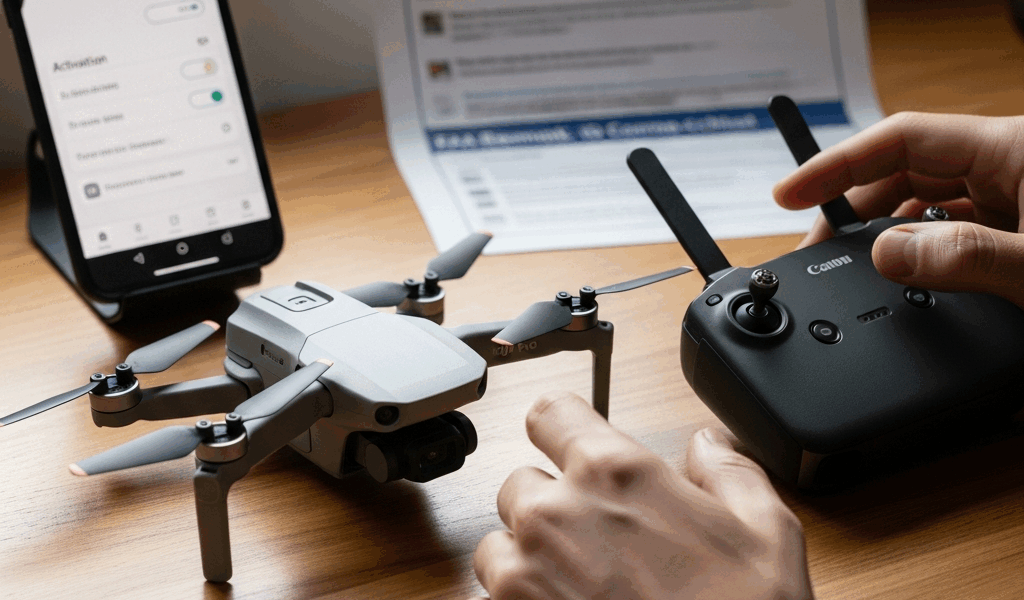
Remote ID has gotten complicated with all the misinformation flying around. So let me clear this up immediately: yes, the DJI Mini 4 Pro has broadcast Remote ID baked directly into its hardware. No external module. No adapter. No additional purchase. It’s already there.
This is the part that trips up nearly every pilot I talk to. They dig through Amazon listings looking for some separate module to clip onto their drone — and there isn’t one, because they don’t need it. The broadcast hardware lives inside the Mini 4 Pro itself, ready to transmit your registration number and location data every single flight. As someone who went through three failed activation attempts before figuring this out, I learned everything there is to know about getting this right. Today, I will share it all with you.
But what is Remote ID? In essence, it’s an automatic broadcast system that transmits your FAA registration number, your drone’s GPS coordinates, altitude, and velocity — every second — on a 900 MHz frequency. But it’s much more than that. Think of it as a digital license plate, one that law enforcement, airport operations, and FAA tools can read in real time. The FAA made it mandatory on June 21, 2023. Any commercial drone sold after that date had to include broadcast capability. The Mini 4 Pro actually launched in September 2022 — DJI pushed a firmware update later to activate it retroactively. That was a smart move, honestly.
The catch? Built-in doesn’t mean automatically on. You have to activate it yourself. You have to enter your FAA registration number manually. You have to confirm it’s working. That’s what this guide walks you through — step by step, no guesswork.
What You Need Before You Start Setup
Probably should have opened with this section, honestly. I spent 45 minutes troubleshooting a failed activation once — turned out I just had the wrong app version. Don’t make my mistake. Here’s the exact checklist before you touch anything:
- DJI Fly app — version 1.5.5 or later. Check your app store right now. Older versions flat-out won’t display the Remote ID menu — it simply won’t exist in your settings.
- Mini 4 Pro firmware — updated to version 4.1.0 or later. This is the big one. Starting setup with outdated firmware is the number one reason activation fails silently, with zero error messages to explain why.
- FAA drone registration number — needed in advance, before you open the app. Haven’t registered yet? Head to faadronezone.faa.gov, register your drone, and grab your registration number — format looks like ABC-1234567. Takes roughly 10 minutes. Costs $5.
- USB-C cable and a computer — optional, but useful if you need to force a firmware update manually.
Before opening the app to begin setup, connect your Mini 4 Pro and let DJI Fly check for firmware updates automatically. The app will prompt you if something’s available — install it. Seriously. Five to ten minutes right now prevents 80% of the problems people report in forums later. Don’t skip it.
How to Activate Remote ID on the Mini 4 Pro
So, without further ado, let’s dive in. Open DJI Fly, connect your Mini 4 Pro, and make sure you’re running app version 1.5.5 or later with firmware 4.1.0 or later before proceeding.
- Tap the three horizontal lines — the menu icon — in the lower right corner of the home screen.
- Select Settings.
- Tap Aircraft.
- Scroll toward the bottom and find Remote ID. It sits below gimbal settings, usually near the very end of the list.
- Tap Remote ID. A toggle switch appears alongside a field labeled Registration Number.
- Flip the Remote ID toggle on.
- Tap the Registration Number field and enter your FAA number — the ABC-1234567 format — then confirm it.
- A green checkmark should appear alongside the text Remote ID Enabled. That’s your success state.
Green status, registration number displayed exactly as entered — that’s what a clean activation looks like. Failed activation shows something different: no input field, a greyed-out toggle, or an error reading “Invalid registration number format.” See any of those? Jump straight to the troubleshooting section below.
Common Remote ID Setup Problems and How to Fix Them
Remote ID Menu Doesn’t Appear in Settings
Outdated firmware — that’s the culprit, almost every time. Reconnect your drone to DJI Fly and force a manual update check. If the app doesn’t prompt you automatically, restart both the app and your phone, then try again. There’s no workaround here. The firmware update isn’t optional.
Registration Number Won’t Save
The FAA format is strict: three letters, a hyphen, seven digits — ABC-1234567. One character off and it rejects the whole thing. Copy and paste directly from your FAA DroneZone account instead of typing manually — manual entry is where typos hide. Still won’t save after pasting? Your DJI Fly version is probably below 1.5.5. Update the app first, then try again.
Toggle Turns On But Shows Red Or No Status Icon
This one signals a communication breakdown between app and drone. Power the drone completely off, wait a full 10 seconds, power it back on, and reconnect. Still red after reconnection? Uninstall and reinstall DJI Fly entirely. I know that sounds nuclear — it isn’t. Corrupted app data causes this specific issue, and a clean reinstall fixes it consistently.
Drone Was Previously Set Up With Wrong Registration Number
Simple fix. Turn Remote ID off, wait 30 seconds, turn it back on, and re-enter the correct number. The system overwrites the old entry on the next toggle — no deeper reset required.
Broadcast Not Detected By FAA Tools
You’ve done everything right in the app, but you’re staring at the FAA tool wondering if the signal is actually leaving your drone. Here’s what to check: you need open sky. Remote ID transmits on 900 MHz — not 2.4 GHz like your home WiFi — and buildings plus dense tree coverage will block it. Head outside, clear view overhead, no structures nearby. If detection still fails out there, toggle Remote ID off and back on once more, fly for 30 seconds, then recheck the portal.
How to Verify Your Remote ID Is Broadcasting Correctly
Activation inside the app is only half the job. You need actual proof the signal is leaving your drone — at least if you want to confirm you’re genuinely compliant and not just assuming.
The FAA’s official option is the Remote ID Test Tool, accessible through DroneZone. Third-party apps like SkySafe work too. For most hobbyists — myself included — the simplest method is flying outdoors, waiting about 60 seconds, then checking the FAA’s Remote ID portal for a logged broadcast showing your registration number and GPS location. It appears there? You’re compliant.
Probably should have opened with this section, honestly — verification is what actually confirms you’re legal, not just tapping a toggle in an app. Build this pre-flight habit: open DJI Fly, tap Remote ID, confirm the toggle is on and showing green. Five seconds. Every single time. Saves real legal headaches down the road.
What compliance actually looks like in the field: drone powered on, Remote ID toggled on in the app, flying within visual line of sight, broadcast logged in the FAA system. That’s the whole picture. Once it’s activated, it transmits automatically every subsequent flight — you’re not manually doing anything extra each time you take off.

Stay in the loop
Get the latest dronefaaregulations updates delivered to your inbox.