This article includes affiliate links. We may earn a commission at no extra cost to you.
What Student Pilots Actually Need in a Headset — Not What Marketing Wants You to Buy
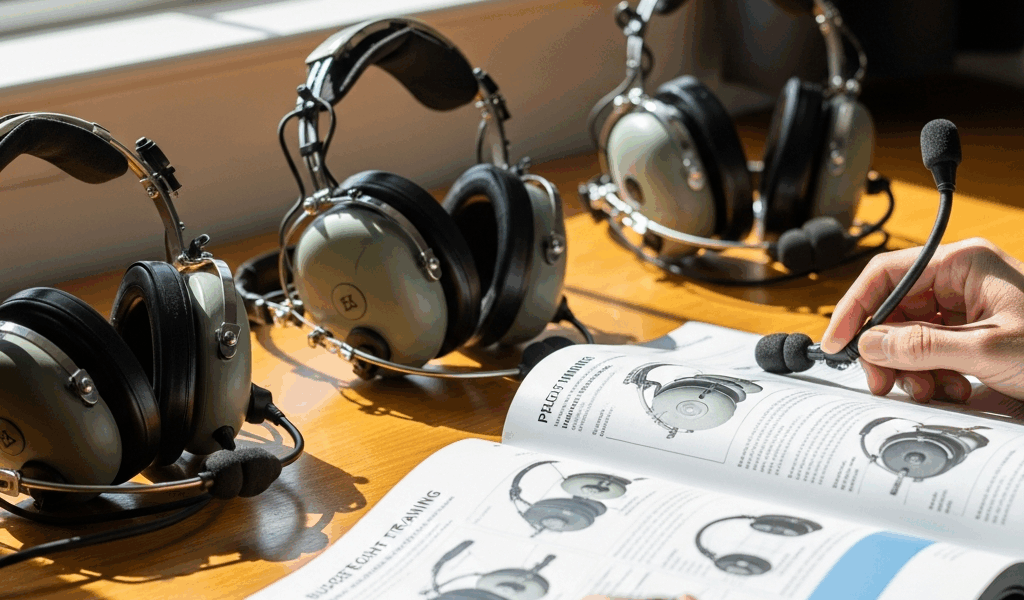
Aviation headset shopping has gotten complicated with all the sponsored content and gear-review noise flying around. As someone who has spent the last twelve years in the right seat watching student pilots burn through cash on the wrong equipment, I learned everything there is to know about what actually matters at 2,500 feet in a Cessna. Today, I will share it all with you.
First, the thing nobody says loudly enough: noise reduction is non-negotiable. A Cessna 172 cockpit at cruise sits around 80 decibels sustained. That’s louder than a garbage disposal running for two straight hours. Your brain cannot track radio calls, scan instruments, and manage a landing checklist when it’s also fighting constant background roar. Early in my instructing career, I told a student to stick with his $50 headset “just for training.” By lesson four, he was mentally fried — couldn’t retain a single ATC instruction. We swapped to a proper headset. His progress basically doubled overnight. Don’t make my mistake.
The noise reduction question breaks into two camps. Active noise reduction, or ANR, uses onboard electronics to cancel ambient sound. Passive isolation relies on better ear seals and heavier construction. But what is the real difference in practice? In essence, ANR wins in sustained, predictable engine noise environments like single-engine GA aircraft. But it’s much more than that — it’s also the difference between arriving at hour three refreshed versus arriving exhausted. Passive designs still work fine. Neither choice is wrong. ANR just costs more and performs better in the specific acoustic environment where students spend most of their time.
Comfort is something students consistently underestimate. You’re logging ten, twenty, sometimes thirty hours during primary training. A headset that pinches your temples feels like mild annoyance during the preflight and feels like a vice grip by the third touch-and-go. Weight matters. Padding density matters. Microphone boom position matters — a boom sitting too close picks up every breath, every tongue click, every nervous exhale on final approach.
Bluetooth is genuinely useful. Connecting your phone for ground ops or between flights is a nice-to-have. Probably should have opened with this section, honestly, because students routinely overpay for wireless capability they end up using maybe twice during the entire certificate. Focus your budget on fit and noise isolation first. Connectivity second. So, without further ado, let’s dive into what’s actually worth buying.
Best Budget Pick — Under $300
The David Clark H10-13.4 is the headset I hand-recommend to every student who walks into my office with a tight budget. This isn’t a newer model. It’s not flashy. No Bluetooth, no active noise cancellation, no app pairing. What it has is roughly forty years of proven design, universal GA compatibility, and resale value that will genuinely surprise you when it’s time to upgrade.
Street price runs $280 to $310 depending on the retailer. Sporty’s and Aircraft Spruce both carry them new. The construction is close to indestructible — I’m apparently the kind of person who drops things in cockpits constantly, and David Clark works for me while cheaper headsets never last a full training season. The ear seals are replaceable. The headband padding is replaceable. The cable is replaceable. A damaged cable costs $30 to swap, not $150. I’ve personally seen H10-13.4s survive coffee spills, a fall from a wing strut, and being sat on by a 200-pound student. They keep working.
Noise isolation comes entirely from passive design — quality padding, proper ear seal compression, and a headband that maintains consistent clamping pressure throughout the flight. It won’t erase all cockpit noise the way ANR does. But it reduces it enough that radio calls come through clearly and mental fatigue doesn’t accumulate over a two-hour cross-country. That’s the bar you need cleared during training. It clears it.
Instructors gravitate toward this headset for very practical reasons. That’s what makes the H10-13.4 endearing to us CFIs — it just removes variables. The microphone boom sits at exactly the right distance. Students don’t accidentally broadcast their breathing or jacket rustling. The push-to-talk feels intuitive after about fifteen minutes. Three-quarters of flight schools probably have at least one student using this exact model right now, which means you might be able to test-drive your school’s loaner version before spending a dollar.
Weight is reasonable. Not the lightest headset on the market — the Lightspeed units are noticeably lighter — but not heavy enough to cause real discomfort during standard training blocks. Buy this headset. Use it through your entire private pilot certificate.
Sell it for around $200 when you upgrade. The real cost per flight hour becomes almost trivial when you run that math.Best Mid-Range Pick — Under $500
Frustrated by accumulated fatigue during back-to-back mountain flying lessons, plenty of students discover they need active noise reduction sooner than they planned. If your training involves terrain avoidance, high-altitude navigation practice, or longer cross-countries pushing two-plus hours, ANR stops being a luxury and starts being a genuine performance tool.
The Lightspeed Sierra sits at $400 to $450. True active noise reduction, Bluetooth phone connectivity, and a design built specifically around GA aircraft acoustics. At 8,000 feet in a Cessna where engine noise shifts character slightly, the Sierra’s cancellation becomes obvious in a way that’s hard to describe until you experience it — radio calls sharpen, the cognitive overhead of filtering background noise drops noticeably, and you arrive on downwind with more left in the tank mentally. This new design philosophy took off several years later and eventually evolved into the Sierra enthusiasts know and trust today.
Alternatively, the David Clark ONE-X runs $450 to $500. Same durability reputation as the H10-13.4, but with active noise reduction, Bluetooth, and noticeably more refined controls. The ONE-X feels like an evolution rather than a refresh. Battery life is solid — I’ve run mine through full instructing days without a charge concern. The battery compartment is accessible even in a cramped C-172 right seat, which matters more than it sounds.
I’ve watched students choose between the Sierra and ONE-X based entirely on head shape. Both perform exceptionally. Both have genuine instructor followings. The real differences live in small details — the Sierra’s Bluetooth integration is marginally smoother, the ONE-X is marginally easier to service. While you won’t need to demo both at an aviation expo, you will need a handful of minutes actually wearing each one before committing $450 to either. Fit is that important.
Mid-range resale value is real but softer than passive designs. Figure 50 to 60 percent recovery when you upgrade. The ANR battery packs are the main long-term cost variable — they wear out eventually, and replacement isn’t always cheap. Plan for that before you swipe the card.
Skip These Until You Have Your License — Premium Options That Wait Well
The Bose A30 and Lightspeed Zulu 3 are genuinely excellent headsets. They are also completely unnecessary for student training, and honestly, recommending them to anyone under fifty hours feels irresponsible to me.
The Bose A30 retails at $1,000 to $1,200. The Zulu 3 sits at $900 to $1,100. Both feature industry-leading ANR, wireless connectivity, and feature sets designed around professional pilots flying regional turboprops or long-haul IFR routes. That’s overkill for someone working through a 60-hour private certificate over six months in a rented 172.
But what is the real issue here? In essence, it’s an information problem. But it’s much more than that — it’s financial risk on top of uncertainty. Here’s what I tell every student directly: you don’t yet know if you’ll fly beyond the license. Some students finish, hang the certificate on the wall, and fly one or two trips per year as a casual hobby. Others catch the aviation bug immediately and start booking instrument ground school before the ink dries. Buying a $1,000 headset before you know which category you fall into is genuinely poor math.
First, you should wait until after your first solo — at least if you want the purchase to feel justified by actual flight experience. The Bose A30 might be the best option eventually, as serious flying requires serious noise management. That is because at 200+ hours annually, every decibel of fatigue reduction compounds across a career. Your future self flying hard IFR in actual IMC will appreciate that A30 far more than your current self flying eight hours a month in VMC.
The H10-13.4 or ONE-X gets you through training. Either one. Both are solid. Neither is wasteful. Both maintain enough resale value that upgrading later doesn’t sting.
Buy now for your current budget and your current needs. You’ll know exactly what you want — and exactly what you’re willing to pay for it — once you’re further along. That version of you will make a much better $1,000 decision than the version of you who just passed the written exam.

Stay in the loop
Get the latest dronefaaregulations updates delivered to your inbox.