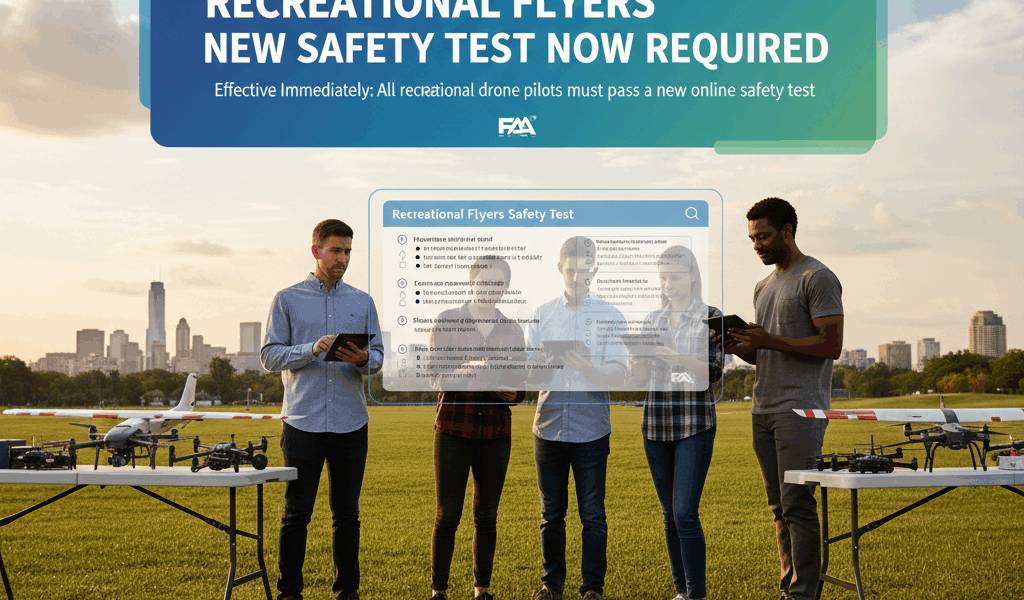
The TRUST test requirement has gotten complicated with all the different providers and misconceptions flying around. As someone who’s guided hundreds of new recreational pilots through the process, I learned everything there is to know about what TRUST requires and how to get it done painlessly. Today, I will share it all with you.
What Is the TRUST Test?
Recreational drone pilots must now complete The Recreational UAS Safety Test (TRUST) before flying. That’s what makes TRUST endearing to us in the drone education space — it’s free, it’s online, and it takes approximately 30 minutes. The FAA designed it as an educational experience rather than a pass-fail exam, so you really can’t fail it. But you do need to actually go through the material and demonstrate basic understanding.
Where to Take TRUST
Multiple FAA-approved test administrators offer TRUST, and they’re all free. Popular options include the Academy of Model Aeronautics, Drone Racing League, Pilot Institute, and several others. Probably should have led with this section, honestly — choosing a provider doesn’t matter much since they all cover the same FAA-required content, but some have slightly better interfaces or additional educational resources beyond the minimum requirements.
I usually recommend the Pilot Institute or AMA versions to people who ask. Both are straightforward, well-organized, and get you through the material without unnecessary padding. But any FAA-approved provider will give you a valid certificate that satisfies the requirement.
What TRUST Covers
The test walks you through essential knowledge areas including airspace rules and where you can legally fly, safety guidelines from community-based organizations, registration requirements, Remote ID basics, and general operating practices. It’s designed to make sure recreational pilots understand the fundamentals before putting a drone in the air. Most of it is common sense if you’ve done any reading about drone regulations, but the airspace and registration sections trip up more people than you’d expect.
Your TRUST Certificate
Here’s the good news — TRUST certificates never expire once earned. You take it once and you’re covered for life under current rules. You’ll receive a digital certificate immediately upon completion that you need to carry while flying. Digital or printed certificates both satisfy the requirement — I keep a screenshot on my phone and a printed copy in my flight bag just to be safe.
If you lose your certificate, you can usually log back into the provider’s website to download another copy. But save it somewhere accessible when you first get it to avoid the hassle. The FAA or law enforcement can ask for proof of TRUST completion during any recreational flight, and not having it readily available creates unnecessary problems.
Important Distinctions
TRUST is only for recreational pilots. If you’re flying commercially or for any business purpose, you need Part 107 certification instead — TRUST doesn’t cover commercial operations. Also, TRUST doesn’t replace drone registration. Drones over 250 grams still need to be registered separately through the FAA DroneZone. Think of TRUST as your knowledge requirement and registration as your aircraft requirement — you need both to fly legally as a recreational pilot.