Drone Privacy Law: When Recording Becomes Illegal Surveillance
Flying a drone with a camera doesn’t grant unlimited rights to record people and property. Privacy laws at federal, state, and local levels create legal boundaries that drone operators must respect. Violating these privacy protections can result in criminal charges, civil lawsuits, and FAA enforcement action—even if your flight otherwise complies with Part 107 regulations.
Federal Privacy Protections
Fourth Amendment Protections
The Fourth Amendment protects individuals from unreasonable searches and surveillance. While primarily limiting government action, it establishes the foundational privacy expectation that influences all drone privacy law.
Key principles:
- People have a reasonable expectation of privacy in their homes and private property
- Surveillance that intrudes on this expectation without consent or warrant can be unconstitutional
- Technology that enables surveillance otherwise impossible (like drones) faces heightened scrutiny
Federal Aviation Administration (FAA) Limits
The FAA regulates airspace and drone operations but explicitly states it does not regulate privacy. However, FAA rules indirectly impact privacy:
- Part 107 prohibits “careless or reckless” operation—privacy violations could meet this standard
- FAA can investigate complaints about invasive drone use
- Local privacy laws don’t override FAA airspace authority but can regulate photography and data use
Federal Wiretapping and Recording Laws
Title 18 U.S. Code § 2511 makes it illegal to intercept oral communications without consent. This affects drone operators who:
- Record audio of private conversations using drone-mounted microphones
- Capture video of conversations where participants have reasonable expectation of privacy
- Use drones for corporate espionage or recording trade secrets
Penalty: Up to 5 years imprisonment and significant fines
State Privacy Laws Affecting Drone Operations
Many states have enacted specific drone privacy legislation. These laws vary widely but commonly address:
Common State Restrictions
Surveillance of Private Property: Many states prohibit using drones to capture images of people or property where there’s a reasonable expectation of privacy.
Prohibited locations include:
- Backyards and private outdoor spaces enclosed by fences
- Windows and interior spaces of residences
- Private property not visible from public spaces
- Swimming pools and hot tubs on private property
- Areas where people are undressing or engaged in intimate activities
Critical Infrastructure: Many states prohibit drone surveillance of:
- Power plants and electrical substations
- Water treatment facilities
- Petroleum refineries
- Chemical plants
- Military installations and defense facilities
- Correctional facilities
Weaponization: All states prohibit equipping drones with weapons or using them to deliver contraband.
State-Specific Examples
California: Prohibits using drones to record individuals engaging in private, personal, or familial activity where they have reasonable expectation of privacy. Allows civil action for invasion of privacy.
Texas: Makes it a Class C misdemeanor to use drones to capture images of individuals or property with intent to conduct surveillance. Exceptions for law enforcement with warrants.
Florida: Prohibits drone surveillance of private property without owner consent unless conducted by law enforcement with warrant. Allows civil action for damages.
Nevada: Requires law enforcement to obtain warrant before using drones for surveillance. Prohibits flying over private property to capture images without consent.
Oregon: Strictly limits law enforcement drone use and prohibits weaponizing drones. Includes privacy provisions for aerial photography.
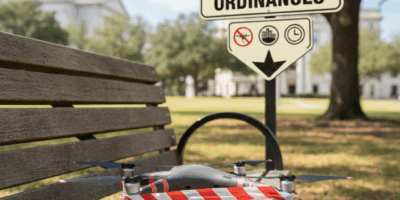
Local Ordinances and City-Level Restrictions
Cities and counties can enact additional privacy protections:
- Prohibitions on flying over specific properties (schools, hospitals, government buildings)
- Restrictions on filming in public parks without permits
- Requirements for operator identification when filming in public spaces
- Noise ordinances that effectively limit drone operations in residential areas
Important: Local laws cannot prohibit drone flight itself (FAA preemption) but can regulate what you do with captured imagery and how you use it.
Reasonable Expectation of Privacy: The Legal Standard
Most privacy laws hinge on “reasonable expectation of privacy”—a legal concept determining where privacy protections apply.
Where Privacy Expectations Exist
- Inside homes: Strongest privacy protection; recording through windows is usually illegal
- Fenced backyards: Generally protected even if visible from nearby buildings
- Private property: Protected if not easily visible from public spaces
- Hotel rooms, bathrooms, changing areas: Absolute privacy expectation
- Medical facilities: HIPAA protections may apply
Where Privacy Expectations Are Limited
- Public streets and sidewalks: Generally no privacy expectation
- Public parks and beaches: Limited privacy, but targeted surveillance of individuals may be problematic
- Public events: Attendees assume they may be photographed
- Business exteriors: Generally no privacy expectation from public view
Gray Areas
- Rooftops: May be protected if not visible from ground level
- Pools partially visible from street: Laws vary by jurisdiction
- Large outdoor gatherings on private property: Depends on fencing, signage, and access restrictions
Consent Requirements
Best practice is obtaining consent before recording people or private property:
When Consent is Legally Required
- Recording in areas with reasonable expectation of privacy
- Filming on private property (need property owner permission)
- Recording minors (may require parental consent)
- Commercial use of recognizable individuals (need model release)
- Recording audio of private conversations
Documenting Consent
For commercial operations, obtain written consent including:
- Permission to operate drone over property
- Rights to use captured imagery
- Duration and scope of permitted use
- Model releases for identifiable people
- Property releases for private property
Civil Liability for Privacy Violations
Even without criminal charges, privacy violations can result in civil lawsuits:
Common Causes of Action
- Invasion of privacy: Intentionally intruding on someone’s private affairs
- Trespass: Some states treat low-altitude drone flight as aerial trespass
- Nuisance: Repeated flights causing disturbance or alarm
- Intentional infliction of emotional distress: Egregious surveillance causing psychological harm
- Defamation: Publishing false information captured via drone
Damages and Penalties
Successful privacy lawsuits can result in:
- Compensatory damages for actual harm
- Punitive damages for intentional or reckless violations
- Injunctions prohibiting future flights
- Attorney fees and court costs
- Destruction of captured footage
Criminal Penalties for Privacy Violations
Depending on jurisdiction and severity, criminal charges may include:
- Voyeurism or “Peeping Tom” laws: Misdemeanor to felony charges for recording people in private settings
- Stalking: Using drones to follow or harass individuals
- Illegal surveillance: State-specific crimes for unauthorized drone surveillance
- Trespassing: Some jurisdictions treat low-altitude drone flight over property as criminal trespass
- Harassment: Repeated unwanted drone presence
Penalties range from: Fines of $500-10,000 and/or jail time from 30 days to 5 years depending on offense and jurisdiction.
Law Enforcement and Government Surveillance
Government agencies face additional restrictions:
- Warrant requirements: Most states require warrants for law enforcement drone surveillance
- Data retention limits: Restrictions on how long surveillance footage can be kept
- Public disclosure: Requirements to publish drone use policies and statistics
- Judicial oversight: Court approval for extended or targeted surveillance
Exceptions often exist for: Exigent circumstances, disaster response, border security, and terrorism prevention.
Commercial vs. Journalism Use
First Amendment Protections
Newsgathering receives some First Amendment protection, but it’s not unlimited:
- Journalists cannot violate trespass laws or invade privacy any more than private citizens
- Public interest in a story doesn’t override all privacy rights
- Coverage of public events generally protected
- Photographing crime scenes from public airspace usually permitted
Commercial Photography
Commercial operators must:
- Obtain property releases for private property
- Get model releases for recognizable individuals
- Respect “no photography” policies
- Avoid filming in areas with contractual restrictions (concerts, sporting events)
Best Practices to Avoid Privacy Violations
- Research local laws: Check state and local privacy regulations before operating
- Obtain permission: Get written consent from property owners and subjects
- Respect privacy boundaries: Don’t film into windows, fenced yards, or private spaces
- Announce your presence: When possible, inform people you’re conducting drone operations nearby
- Minimize intrusion: Use altitude and distance to reduce privacy impact
- Limit recording: Don’t capture more than necessary for your purpose
- Secure footage: Protect captured data from unauthorized access
- Delete unused footage: Don’t retain images of people or property you won’t use
- Respect posted signage: Honor “no drone” or “no photography” signs
- Document your authorization: Keep records of permissions obtained
Responding to Privacy Complaints
If someone complains about your drone operations:
- Stop flying immediately: Don’t escalate the situation
- Communicate respectfully: Explain your purpose and legal authority
- Show credentials: Display Part 107 certificate and client authorization if applicable
- Offer to delete footage: If you inadvertently captured someone, offer to delete it
- Document the interaction: Note time, location, and nature of complaint
- Consult your client: If on assignment, notify your client of the issue
- Contact legal counsel: If threatened with legal action, don’t make admissions
Key Takeaways
Drone privacy law is a complex patchwork of federal, state, and local regulations. While the FAA doesn’t regulate privacy directly, violating privacy laws can result in criminal charges, civil lawsuits, and FAA enforcement action. Respect reasonable expectations of privacy—don’t record people or property in private settings without consent. Always research state and local privacy laws before operating, obtain written permission when required, and document your authorizations. When in doubt, err on the side of respecting privacy. The legal and reputational costs of privacy violations far outweigh any benefit from capturing unauthorized footage. Operate ethically, respect boundaries, and build trust through responsible drone use.