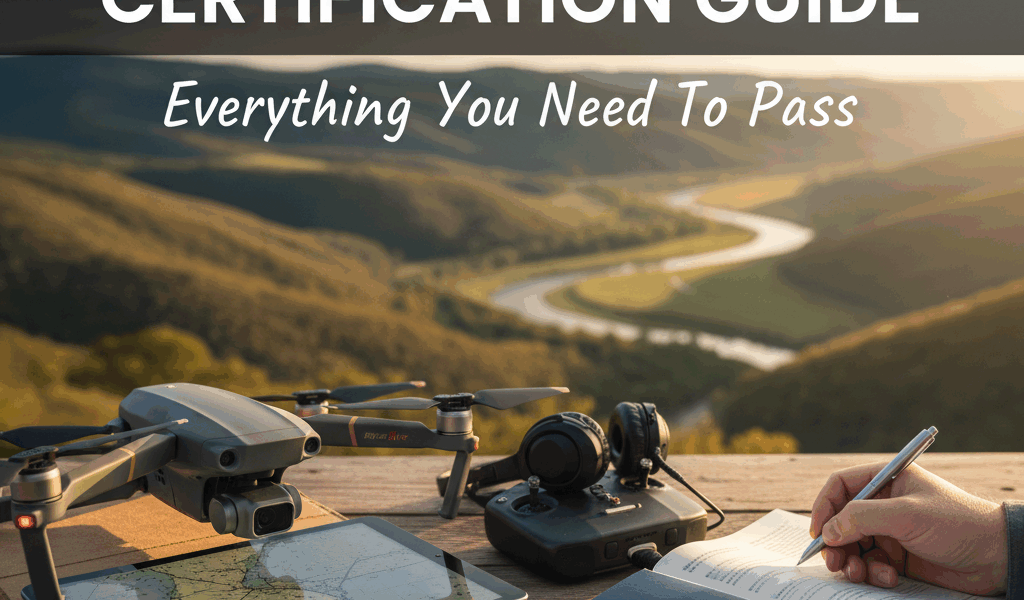
Part 107 certification has gotten complicated with all the study materials and test prep flying around these days. As someone who passed the test on the first try and has since helped over 30 people get certified, I learned everything there is to know about what actually matters for passing versus what the study courses waste your time on. Today, I will share it all with you.
Who Actually Needs Part 107 Certification
Part 107 certification is required for anyone conducting commercial drone operations in the United States. “Commercial” means any flight where you receive compensation — directly or indirectly — for drone services.
The obvious cases: aerial photography, surveying, inspections. The less obvious: real estate agents using drone photos to market properties. Farmers monitoring their own crops (the drone work benefits a commercial enterprise). YouTubers monetizing drone content. When in doubt, assume you need certification.
Recreational pilots flying purely for fun under the Exception for Limited Recreational Operations do not need Part 107, but must follow separate rules — visual line of sight, below 400 feet, approved locations only.
Eligibility Requirements
Before you start, verify you meet basic eligibility:
- At least 16 years old
- Can read, speak, write, and understand English
- In physical and mental condition to safely operate a drone
- Pass the knowledge test
No prior aviation experience required. Unlike manned aircraft pilot certificates, Part 107 does not require flight training, medical certification, or logged flight hours. The certificate is entirely based on passing a written exam.
The Part 107 Knowledge Test
The exam has 60 multiple-choice questions covering five major topic areas. You get two hours and need 70 percent or higher to pass. Questions are drawn randomly from a large question bank.
Topic Area 1: Regulations (15-25%)
Understand Part 107 operating rules — altitude limits, visual line of sight requirements, airspace classifications, pilot responsibilities. Know when waivers are required. Understand registration requirements and aircraft marking rules.
Topic Area 2: Airspace and Requirements (15-25%)
Probably should have led with this section, honestly. This is where most people struggle. Master airspace classifications from Class A through Class G. Know which airspace requires prior authorization through LAANC or manual authorization. Learn to read sectional charts, identify airports, and recognize temporary flight restrictions.
Topic Area 3: Weather (11-16%)
Learn to interpret METARs, TAFs, and aviation weather reports. Understand how temperature, pressure, humidity, and wind affect drone operations. Know weather minimums for Part 107 operations.
Topic Area 4: Loading and Performance (7-11%)
Understand how weight, balance, and density altitude affect aircraft performance. Know how battery performance changes with temperature and altitude.
Topic Area 5: Operations (35-45%)
The largest topic area covers practical flight operations including crew resource management, preflight procedures, emergency procedures, and aeronautical decision-making. Understand how to conduct safe operations and respond to equipment failures.
Study Resources That Actually Work
Free resources include the FAA Remote Pilot Study Guide available as a PDF from faa.gov. It covers all testable material but requires self-discipline.
Commercial courses from Pilot Institute, Drone Pilot Ground School, and UAV Coach offer structured curricula with video lessons, practice tests, and support. Prices range from $50 to $300. Worth it if you learn better with structure.
Plan two to four weeks of study time. Those with existing pilot certificates often pass after a weekend of focused study. Complete beginners typically need 15-20 hours of preparation. Don’t schedule the test until you’re consistently scoring above 80 percent on practice exams.
Scheduling Your Test
Part 107 exams are administered at FAA-approved Knowledge Testing Centers operated by PSI Services. Schedule through the PSI website or call their scheduling line. Testing centers exist throughout the country — usually within driving distance of most metros.
The exam fee is currently $175 paid directly to the testing center. This fee is non-refundable if you fail. Don’t schedule until you’re ready.
Bring government-issued photo ID. Arrive 15 minutes early. Personal items including phones, watches, and notes are prohibited in the testing room.
After Passing
Upon passing, you receive a temporary certificate valid for 120 days while the FAA processes your permanent certificate. Apply for your permanent Remote Pilot Certificate through the FAA IACRA system within 10 days of passing.
Your permanent certificate arrives by mail within 6-8 weeks. The certificate doesn’t expire but requires recurrent training every 24 months to remain valid for commercial operations.
Maintaining Your Certificate
Part 107 certificates require recurrent training every 24 months. Complete the free online recurrent training course through the FAA WINGS program. Takes about an hour and covers regulatory updates and safety topics.
Keep records of your recurrent training completions. The FAA maintains electronic records, but having personal documentation helps resolve discrepancies if they ever come up.
Common Mistakes to Avoid
Most test takers underestimate airspace questions and sectional chart interpretation. Spend extra time on these — they comprise a significant portion of the exam and cause the most failures.
Don’t rely solely on memorizing practice test answers. The FAA question bank changes regularly. Understanding why answers are correct matters more than recognizing specific questions.
Schedule your test promptly after completing study materials. Knowledge fades quickly. Delaying the exam lets forgetting erode your preparation.