Why Aviation Headsets Matter: Beyond Just Hearing
The cockpit environment subjects pilots to sustained noise levels of 80-100 decibels, well above the threshold for hearing damage. Quality aviation headsets serve three critical functions: hearing protection, clear communication, and reduced fatigue. After extended flights, the difference between a budget headset and a premium model becomes painfully apparent—literally.
Modern aviation headsets have evolved from simple ear protection into sophisticated communication devices featuring active noise reduction, Bluetooth connectivity, and audio prioritization systems. The investment in a quality headset pays dividends in comfort, safety, and long-term hearing health.
Passive vs Active Noise Reduction (ANR)
Understanding the fundamental difference between passive and active noise reduction is essential to selecting the right headset for your flying style and budget.
Passive Noise Reduction
Passive headsets use physical barriers—thick ear seals, sound-absorbing materials, and closed-cup designs—to block external noise. This mechanical approach provides consistent noise reduction of approximately 20-25 decibels across all frequencies without requiring batteries or electronic components.
Advantages of passive headsets include simplicity, reliability, and zero operational costs beyond the initial purchase. They never run out of batteries at inopportune moments and maintain consistent performance in all temperatures. However, passive reduction alone struggles with low-frequency engine noise and can create pressure on the head during long flights due to the tight seal required for effectiveness.
Active Noise Reduction (ANR)
ANR headsets use microphones to sample external noise, then generate inverse sound waves that cancel incoming noise before it reaches your ears. This electronic cancellation is particularly effective against steady, low-frequency sounds like engine rumble and propeller noise—exactly the most fatiguing frequencies in aviation.
ANR headsets typically provide 40-50 decibels of noise reduction, nearly double that of passive headsets. The improved noise cancellation translates to significantly reduced fatigue, better communication clarity, and enhanced situational awareness. Pilots consistently report arriving less exhausted after long flights when using ANR headsets.
The trade-off is complexity: ANR headsets require batteries (typically 20-40 hours between changes), cost significantly more, and add electronic components that can fail. Most modern ANR headsets include passive noise reduction as well, ensuring basic protection even if batteries die or electronics fail.
Premium Aviation Headsets: The Gold Standard
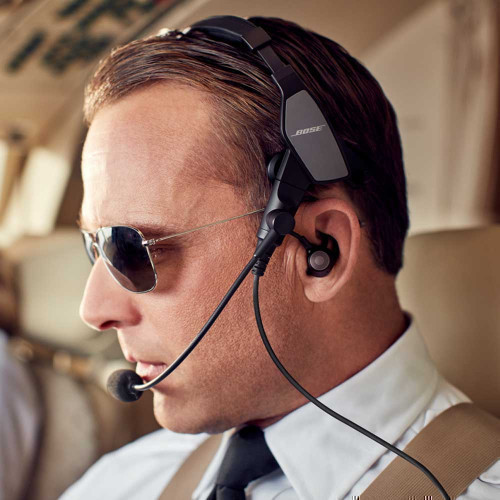
Bose A20 Aviation Headset – $1,100
The Bose A20 has dominated the premium aviation headset market for over a decade with good reason. Bose’s legendary noise cancellation technology delivers industry-leading quietness, reducing cockpit noise by up to 30% more than competitive ANR headsets.
Key features include exceptional comfort during extended flights thanks to minimal clamping force and soft ear cushions, Bluetooth connectivity for phone calls and music, customizable audio prioritization that automatically lowers music when ATC transmits, and impressive 45-hour battery life from just two AA batteries.
The A20’s Achilles heel is durability—the thin cables and plastic components don’t tolerate rough handling as well as competitors. However, Bose’s customer service and warranty support are excellent. For pilots prioritizing comfort and noise reduction above all else, the A20 remains the benchmark.
Lightspeed Zulu 3 – $900
The Lightspeed Zulu 3 challenges the Bose A20 with comparable noise reduction, superior build quality, and innovative comfort features. Lightspeed’s proprietary FlightFlex boom provides exceptional microphone positioning stability, while the company’s comfort-focused design includes temperature-controlled ear seals that remain comfortable in all weather conditions.
Standout features include outstanding audio clarity consistently praised by pilots and air traffic controllers, robust construction with Kevlar-reinforced cables, BluLink wireless connectivity for music and phone, auto-shutoff to preserve battery life, and Lightspeed’s industry-best seven-year warranty.
The Zulu 3 weighs slightly more than the Bose A20, which some pilots notice during long flights. However, the superior build quality and warranty make this the choice for pilots who keep headsets for many years. Flight schools and commercial operators often standardize on Zulu 3 headsets due to their durability.
David Clark ONE-X – $800
David Clark leveraged decades of passive headset experience to create the ONE-X, their first ANR headset designed to compete directly with Bose and Lightspeed. The result is a tank-like headset that tolerates abuse while delivering impressive noise reduction.
Notable features include legendary David Clark durability with metal construction throughout, hybrid electronic noise cancelling (ENC) technology providing excellent low-frequency reduction, Bluetooth audio with intuitive controls, comfortable gel ear seals, and user-replaceable components for long-term serviceability.
The ONE-X feels heavier than competitors due to its robust construction, and some pilots find the clamping force higher than the Bose A20. However, for pilots who prioritize longevity and field repairability, the ONE-X is an excellent investment. This headset can realistically last 15-20 years with proper maintenance.
Mid-Range Aviation Headsets: Best Value
Lightspeed Sierra – $650
The Sierra delivers approximately 85% of the Zulu 3’s performance at 70% of the cost, making it the best value in aviation headsets. Lightspeed achieved this by using slightly less expensive materials and simplifying some features while maintaining the core ANR technology.
The Sierra includes effective ANR comparable to headsets costing $200-300 more, the same great audio quality as the Zulu 3, comfortable design suitable for multi-hour flights, Kevlar-reinforced cables, and Lightspeed’s excellent seven-year warranty.
What you sacrifice compared to premium models: no Bluetooth connectivity, slightly less sophisticated ANR algorithms, and basic ear seals without temperature control. For pilots who don’t need wireless features, the Sierra represents exceptional value.
Faro G2 ANR – $500
Faro’s G2 ANR punches well above its price point, offering ANR performance that rivals headsets costing twice as much. While less well-known than Bose or Lightspeed, Faro has built a reputation for reliable, cost-effective aviation headsets.
Features include solid ANR performance effectively reducing low-frequency noise, comfortable fit with gel ear seals, auxiliary audio input for music or GPS, durable construction, and outstanding warranty support from a family-owned company.
The G2’s limitations include bulkier, less refined design compared to premium models, slightly higher battery consumption (20-25 hours per set), and no Bluetooth connectivity. The audio quality, while good, doesn’t quite match Lightspeed or Bose clarity. Still, for budget-conscious pilots wanting ANR performance, the Faro G2 delivers remarkable value.
Budget Aviation Headsets: Reliable Passive Noise Reduction
David Clark H10-13.4 – $350
The David Clark H10-13.4 has been the standard passive aviation headset for over 30 years. This workhorse headset appears in flight schools worldwide, testament to its durability and effectiveness.
The H10-13.4 offers proven passive noise reduction (approximately 23 dB), virtually indestructible metal and leather construction, excellent microphone clarity, user-serviceable design with available replacement parts, and zero operating costs—no batteries required.
The trade-offs are significant: higher pilot fatigue during long flights due to limited noise reduction, tight clamping force required for effective seal, heavier weight compared to ANR headsets, and no modern features like Bluetooth or auxiliary audio.
However, for pilots flying primarily short local flights, flight students on tight budgets, or as backup headsets, the H10-13.4 remains an excellent choice. Many pilots who learned to fly in the 1990s still use their original H10-13.4 headsets decades later.
Key Features to Consider
Comfort for Extended Flights
Comfort is highly individual, but key factors include headband padding and adjustability, ear seal material and size, clamping force, and overall weight. If possible, try headsets before purchasing or buy from retailers with generous return policies. What feels comfortable for 30 minutes may become painful after three hours.
Audio Clarity
Clear communication is literally a safety issue in aviation. Evaluate both incoming audio quality (can you understand ATC in noisy conditions?) and microphone clarity (can ATC understand you?). Premium headsets use sophisticated audio processing to enhance voice frequencies and suppress background noise.
Bluetooth Connectivity
Modern headsets with Bluetooth allow connection to smartphones and tablets for music, podcasts, or GPS audio alerts. Advanced models include audio prioritization that automatically reduces entertainment volume when radio communications occur. This feature is increasingly valuable as pilots integrate tablets like ForeFlight into cockpit workflows.
Durability and Build Quality
Aviation headsets endure significant abuse: temperature extremes, moisture, repeated coiling and uncoiling of cables, and being tossed in flight bags. Examine cable reinforcement, boom flexibility, ear seal attachment methods, and overall construction quality. Metal components generally outlast plastic, while replaceable cables extend headset lifespan significantly.
Warranty and Customer Service
Warranty coverage varies dramatically: some manufacturers offer 5-7 year comprehensive warranties, while others provide only 1-2 years. Customer service responsiveness matters when your headset fails before an important flight. Research manufacturer reputations and warranty terms before purchasing.
Maintenance Tips for Longevity
Proper maintenance extends headset life significantly:
- Clean ear seals regularly: Use mild soap and water to remove oils and dirt that degrade seals over time
- Store properly: Use a headset bag or case to prevent cable damage and protect electronics
- Replace ear seals proactively: Most manufacturers recommend seal replacement every 12-18 months for optimal comfort and noise reduction
- Inspect cables frequently: Look for fraying, kinks, or damage near connectors—the most common failure point
- Battery management: Remove batteries during extended storage to prevent corrosion
- Avoid extreme temperatures: Don’t leave headsets in direct sunlight or freezing aircraft for extended periods
- Microphone boom care: Don’t use the boom as a handle—repeated stress causes failure
Making Your Decision
The right aviation headset depends on your flying frequency, budget, and priorities:
For professional pilots and frequent flyers: Premium ANR headsets like the Bose A20 or Lightspeed Zulu 3 justify their cost through reduced fatigue and enhanced communication. The comfort difference during 4-6 hour flights is transformative.
For recreational pilots flying 50-100 hours annually: Mid-range ANR options like the Lightspeed Sierra or Faro G2 provide excellent performance without premium pricing.
For student pilots and budget-conscious flyers: The David Clark H10-13.4 offers proven reliability and zero operating costs, though upgrading to ANR once you complete training significantly improves the flying experience.
Remember that an aviation headset is a long-term investment in your hearing health, safety, and enjoyment of flying. Quality headsets last 10-15 years or longer with proper care, making the per-flight cost remarkably low. Your ears—and your passengers—will thank you for choosing wisely.




Stay in the loop
Get the latest dronefaaregulations updates delivered to your inbox.