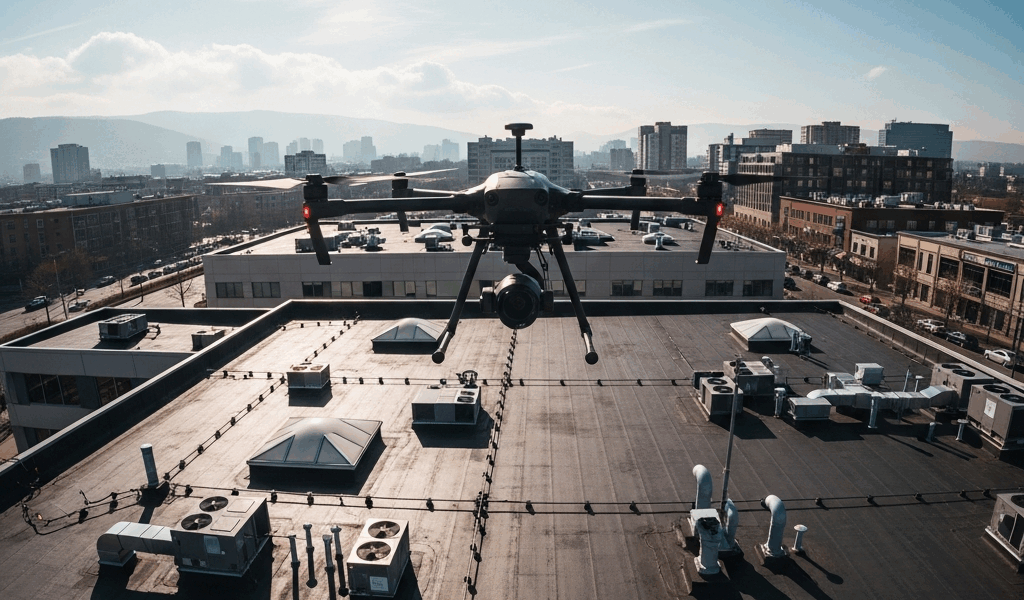
You want to fly a drone and you keep seeing two sets of rules — Part 107 and recreational. You’re not sure which applies to you, whether you need a license, or what happens if you pick the wrong one. The FAA has made this more confusing than it needs to be by splitting the rules based on why you’re flying rather than how you’re flying.
Here’s the difference, who needs which, and when it matters.
The Core Distinction: Why You Fly
The FAA divides drone operations into two categories based on purpose, not skill level or equipment.
Recreational: You’re flying purely for fun, personal enjoyment, or as a hobby. No commercial purpose whatsoever. Taking photos for yourself, flying in your backyard, filming your kid’s soccer game for family — these are recreational.
Part 107 (commercial): Any flight conducted for a business purpose or in furtherance of a business. Real estate photography, roof inspections, agricultural surveys, YouTube videos where you earn ad revenue, posting drone footage to a monetized Instagram account — all Part 107.
The key test: does the flight connect to any business activity or income? If yes, you need Part 107. If no, recreational rules apply. The FAA doesn’t care whether you’re good at flying or have expensive equipment — a DJI Mini flown for real estate photos requires Part 107 while a $5,000 racing drone flown for fun does not.
Recreational Rules: What You Can and Can’t Do
Under recreational rules (Section 44809), you don’t need a pilot certificate or license. You do need to:
Pass the TRUST test (The Recreational UAS Safety Test) — a free online knowledge quiz that takes about 30 minutes. It’s not proctored and isn’t particularly difficult. Register your drone if it weighs over 250 grams ($5 at faadronezone.faa.gov). Fly below 400 feet AGL. Keep visual line of sight at all times. Not fly over people or moving vehicles. Not fly in controlled airspace (near airports) without LAANC authorization. Not fly at night without proper anti-collision lighting.
Recreational flying under the community-based organization (CBO) model lets you fly at established model aircraft fields with specific safety guidelines. Outside CBO sites, you follow the FAA’s standard recreational rules listed above.
Part 107: What the Certificate Gets You
A Part 107 Remote Pilot Certificate costs $175 for the knowledge test and requires more study, but it gives you significantly more operational flexibility:
Fly for any commercial purpose. Fly at night (with anti-collision lighting — no waiver needed since 2021). Fly over people in certain categories (depending on your drone’s weight and characteristics). Request airspace authorizations through LAANC for controlled airspace operations. Apply for waivers to operate beyond standard limitations (e.g., beyond visual line of sight with specific safety mitigations).
Part 107 pilots also face stricter accountability. You must maintain currency through biennial recurrent training. You’re responsible for airspace compliance. Violations can result in certificate action — not just a warning letter.
The Gray Area: When Recreational Becomes Commercial
This is where most people get confused. The FAA’s definition of “commercial” is broader than most hobbyists realize.
YouTube and social media: If your drone footage appears on a monetized YouTube channel or a social media account that generates income (sponsorships, affiliate links, ad revenue), the FAA considers those flights commercial. You need Part 107.
Favors for businesses: If a friend asks you to take aerial photos of their property for a real estate listing and you do it for free, the FAA still considers this commercial because it furthers a business purpose. The absence of payment doesn’t make it recreational.
Selling photos or video: If you fly recreationally and later decide to sell the footage — that retroactively makes the flight commercial in the FAA’s view. This is rarely enforced in practice, but it’s the official interpretation.
Which Do You Actually Need?
Get Part 107 if: You plan to make any money from drone operations — now or in the future. You want to offer services to others (photography, inspections, mapping). You post drone content on monetized platforms. You want maximum operational flexibility under FAA rules.
Stay recreational if: You fly purely for personal enjoyment with no business connection whatsoever. You never plan to sell footage or offer services. You’re comfortable with the altitude, airspace, and operational restrictions.
If there’s any doubt, get Part 107. The $175 exam fee and 15-25 hours of study eliminate the ambiguity entirely. Once certified, every flight you take — recreational or commercial — is covered. You never have to wonder whether posting a video crosses the line. The certificate costs less than most drones and lasts a lifetime with free biennial renewals.



Stay in the loop
Get the latest dronefaaregulations updates delivered to your inbox.